Altherum
VIDEO: The End of “One Buyer, One Painting” From Exclusive Ownership to Fractional Access
Discover how tokenization is transforming art investing—enabling fractional ownership, portfolio diversification, and access to high-value assets like Warhol.
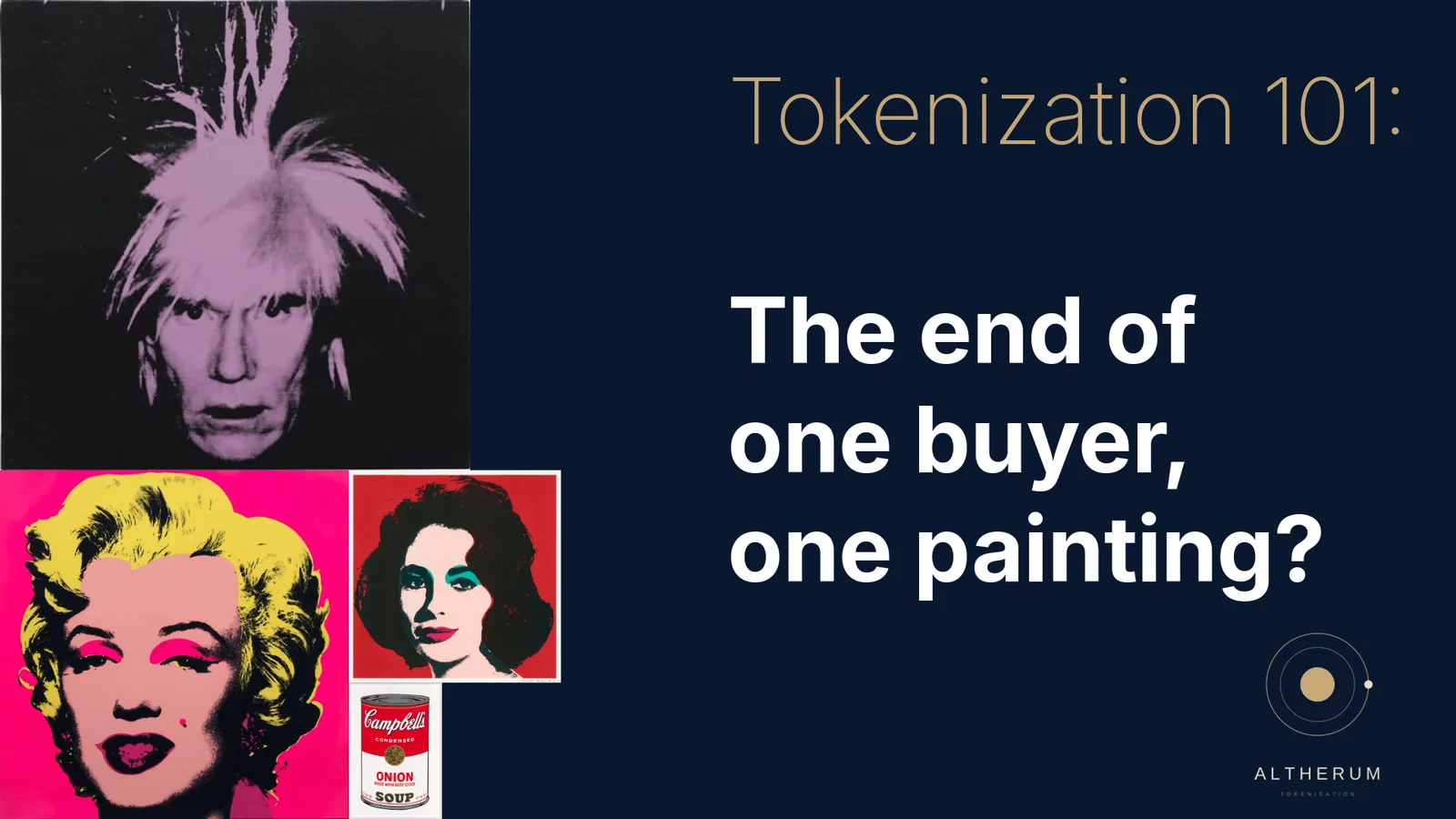
For over a century, investing in iconic art followed a simple rule: one painting, one owner. If you wanted a Warhol, you needed millions—and the ability to acquire and maintain a museum‑grade asset.
That model is now being disrupted.
Through tokenization, high-value artworks can be divided into digital shares, allowing multiple investors to own a fraction of a single piece. These shares—known as tokens—are recorded on a blockchain, creating a transparent and verifiable record of ownership.
The physical artwork doesn’t move. It remains securely stored, insured, and professionally managed. But ownership becomes fluid, transferable, and accessible in ways never before possible.
How Tokenized Ownership Works
Tokenization converts ownership rights of a real-world asset—such as fine art—into digital tokens on a blockchain. Each token represents a portion of that asset and can be bought, sold, or transferred between investors.
This fundamentally changes how people interact with art as an investment:
Instead of buying a $5M painting, investors can own a fraction
Transactions become faster and more transparent
Ownership can be divided and traded globally
The blockchain acts as a secure ledger, tracking ownership with precision while reducing reliance on intermediaries.
From One Asset to a Portfolio
This shift unlocks a powerful new concept: diversification within collectibles.
Traditionally, a €1 million investment might secure a single artwork. With tokenization, that same capital can be spread across multiple assets—ranging from blue-chip artists like Andy Warhol to emerging creators, luxury watches, or even rare diamonds.
Fractional ownership enables investors to diversify across different categories without committing all their capital to a single piece.
This mirrors the evolution of financial markets—where diversification is a cornerstone of risk management.
Why Institutions Are Paying Attention
Tokenization is not a niche experiment—it is rapidly becoming a core financial trend.
Major institutions like BlackRock and Franklin Templeton are already launching tokenized funds and exploring blockchain-based ownership models. [6] BlackRock’s BUIDL fund, for example, issues tokenized shares on blockchain networks, enabling faster settlement and broader access.
According to industry projections, the tokenized real-world asset market could reach up to $13–$16 trillion by 2030, reflecting massive expected growth.
Not Crypto—A New Layer for Real Assets
One of the most important distinctions is that tokenization is not about cryptocurrency speculation.
The underlying asset in a tokenized artwork remains physical, tangible, and independently valued. The blockchain simply records ownership and facilitates transfer—bringing efficiency, transparency, and accessibility to traditionally illiquid markets.
A Structural Shift in Investing.
Tokenization is redefining ownership.
It transforms assets that were once static and exclusive into dynamic, investable opportunities. It allows investors to think in portfolios instead of individual purchases—and to access markets that were previously out of reach.
For art, this represents a fundamental change: the canvas stays the same, but ownership evolves.