Altherum
Can Art Outperform Wall Street? The $19,000 Painting That Became $110 Million
Can art outperform Wall Street? Explore data on art investment returns, market trends, and how tokenization is transforming access to high-value artworks.
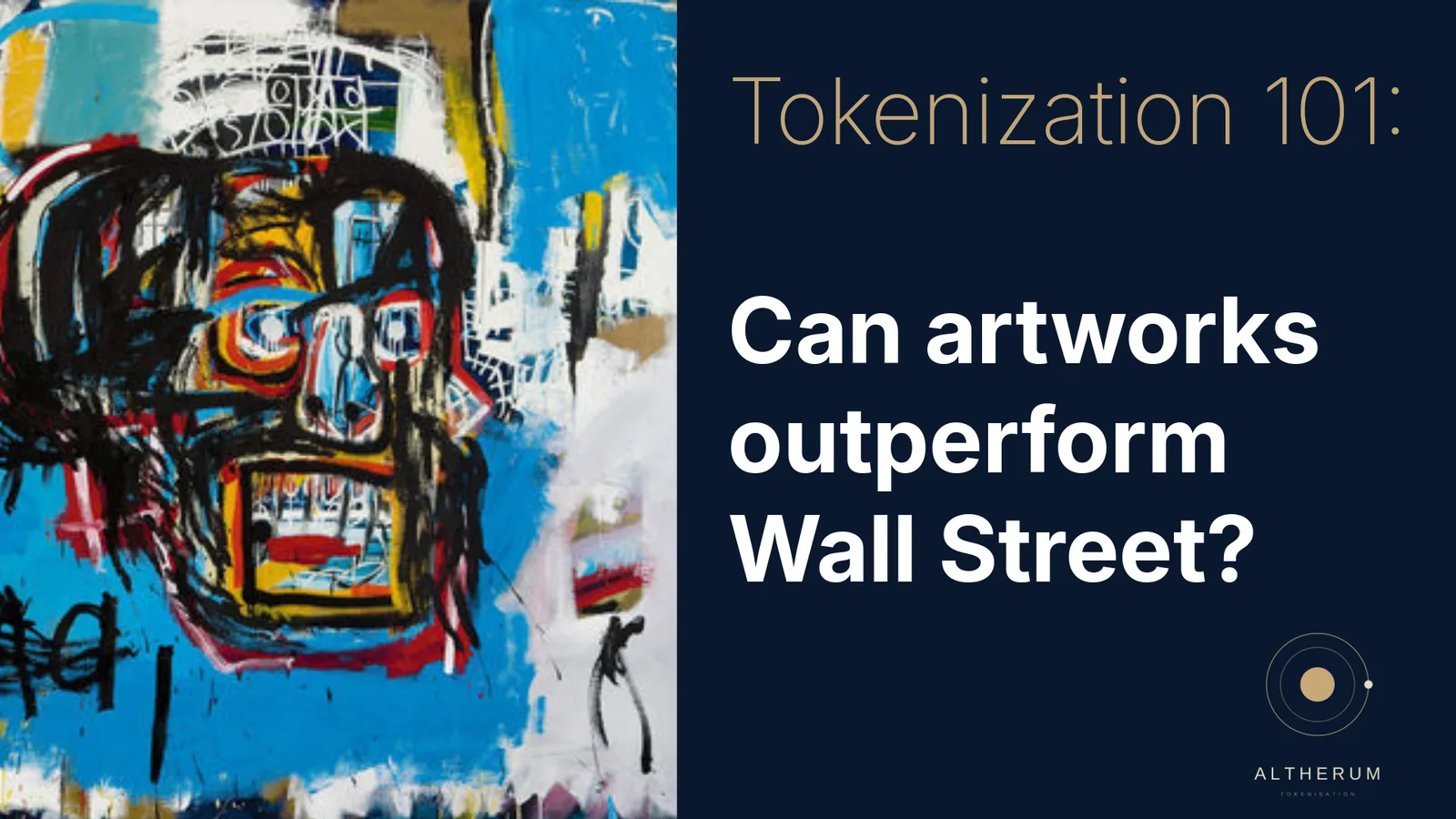
In 1984, a Jean-Michel Basquiat painting sold for just $19,000. Fast forward to May 2017, and that same work—Untitled (1982)—fetched $110.5 million at Sotheby’s, setting a record for an American artist at auction. This extraordinary story illustrates the explosive upside potential of art—and why more investors are beginning to ask whether art can truly outperform Wall Street.
Basquiat’s rise is not just about artistic brilliance; it’s about scarcity. His career lasted less than a decade, and his total output is finite. With no new works entering the market, increasing demand from collectors, museums, and institutions has driven prices sharply higher—turning select pieces into blue-chip assets.
How Art Compares to Traditional Markets
Performance data suggests that art can, under the right conditions, rival or exceed equities. Between 1995 and 2023, contemporary art delivered an average annual return of approximately 11.5%, compared to 9.6% for the S&P 500. Other datasets report even stronger results, with contemporary art achieving annualized returns of around 12–13% over multi-decade periods.
In some individual years, art has significantly outperformed stocks. For example, the Artprice100 index—a benchmark tracking top artists—rose in years when equities declined, highlighting its potential resilience. However, the reverse is also true: in strong bull markets like 2025, stocks can outpace art.
The takeaway is clear: art’s performance is compelling, but it doesn’t follow the same cycle as public markets.
Why Art Can Outperform
Art’s investment strength lies in three core factors:
Scarcity: Unlike stocks, supply is fixed—especially for deceased artists like Basquiat.
Global Demand: Wealth expansion and cultural interest continue to grow the collector base.
Market Independence: Art prices are driven by cultural relevance, provenance, and sentiment—not corporate earnings.
This independence creates one of art’s most important advantages: low correlation with traditional asset classes. Studies show that art behaves differently from stocks and bonds, helping reduce overall portfolio volatility.
The Risks Investors Shouldn’t Ignore
Despite its upside, art is not a guaranteed outperformer. Returns vary widely depending on artist selection, timing, and access to high-quality works. Many pieces underperform—or fail to appreciate at all. Additionally, art is illiquid, with holding periods often spanning years, and transaction costs can be significant.
Even institutional data highlights that while art can enhance portfolio returns, it should be approached as a long-term, diversified allocation rather than a speculative bet.
A New Era of Access
Historically, investing in art required significant capital and insider access. Today, platforms offering fractional ownership are changing that dynamic, enabling a broader audience to participate in high-value artworks.
So, Can Art Outperform Wall Street?
The answer is nuanced. Art has demonstrated the ability to outperform equities over long periods—especially in the contemporary segment—but performance is uneven and highly selective.
For investors willing to think beyond traditional markets, art represents more than an asset class. It’s a store of cultural value with the potential for financial return—one that, in the right circumstances, can rival Wall Street itself.
To learn more about alternative assets and tokenization, visit Althrerum Tokenization.