Private Credit Opportunities in Europe’s Eco‑Luxury Winery Resorts: A Sustainable Real Asset Investment Theme
How private credit is financing Europe’s eco‑luxury winery resorts — combining sustainable real assets, diversified revenue, and resilient hospitality demand.
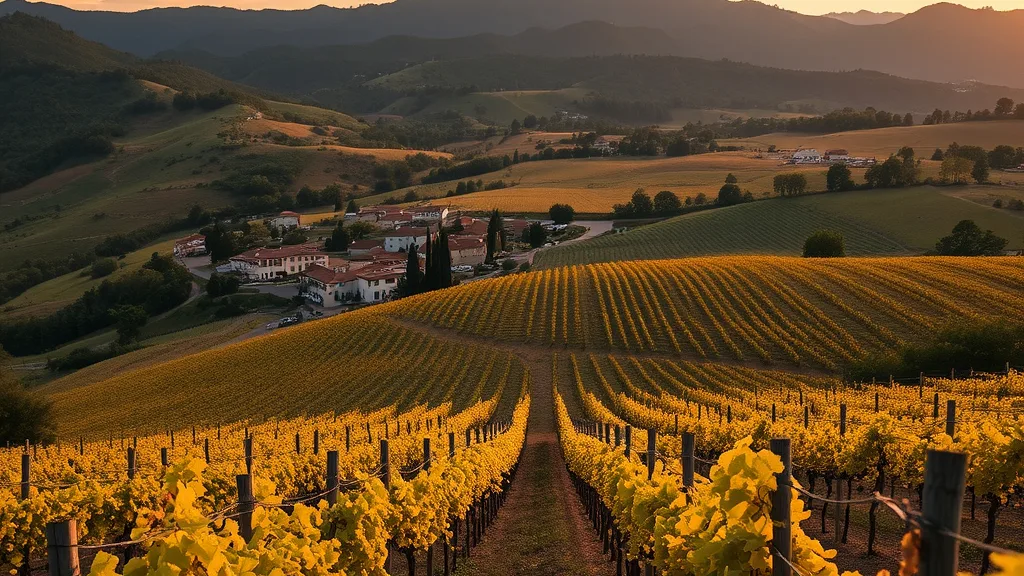
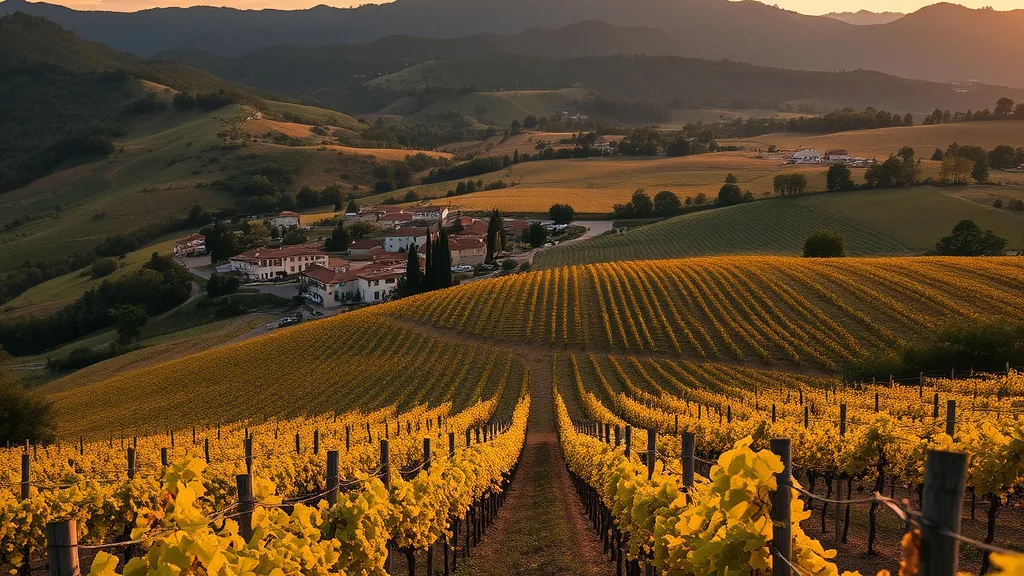
At CGPH Banque d’affaires, we see a growing intersection between European private credit, experiential luxury hospitality, and sustainability-led real assets. Ecological luxury winery resorts sit at that intersection. They combine destination hospitality, vineyard-linked identity, wellness, gastronomy, and increasingly important environmental credentials in a single operating platform. For private lenders and professional investors, this matters because the asset class offers both hard-asset backing and multiple revenue streams, while benefiting from resilient travel demand and a widening investor preference for differentiated, sustainability-aware projects. Europe remains the largest tourism region globally, and recent data suggest that travel demand has stayed firm even as the macro backdrop has become more complex.
Unlike generic resort concepts, eco-luxury winery resorts are supported by a more specific and more defensible demand profile. They appeal to affluent travelers seeking high-end but place-based experiences: wine, local cuisine, countryside wellness, nature, and authenticity. That profile aligns well with current tourism trends in Europe, where spending growth has outpaced arrivals in several markets and where wellness, slow travel, and off-season demand are becoming more visible demand drivers. For private credit, this kind of project can be attractive when underwriting is built around asset quality, sponsor capability, conservative ramp-up assumptions, and a sustainability strategy that is operational rather than cosmetic.
Eco‑Luxury Winery Resorts as a Differentiated European Hospitality Investment
The European hospitality market is no longer just a recovery story. It is increasingly a selection story. CBRE’s 2026 European hotel outlook expects measured growth, supported by inbound travel, international business demand, and relatively disciplined supply. That backdrop is important for lenders because differentiated hospitality assets are more likely to preserve pricing power than undifferentiated room inventory. Winery resorts benefit from this because they do not compete only on accommodation. They typically monetize across rooms, food and beverage, wine experiences, private events, wellness, retail, tastings, and destination programming.
Wine tourism adds a particularly valuable layer to the underwriting case. The Global Wine Tourism Report 2025, produced by Hochschule Geisenheim University with partners including UN Tourism and OIV, describes wine tourism as a dynamic and profitable branch of the wine industry. The report notes that about two-thirds of wineries see wine tourism as profitable and that it accounts for roughly a quarter of total revenue on average. It also highlights strong links to regional development, heritage, sustainability, gastronomy, and rural economic resilience. For investors, this supports the idea that a winery resort is not merely a themed hotel. It can be a higher-engagement operating model with more diversified sources of spend and stronger destination stickiness.
The same report is useful from a demand perspective. It points to sustained interest in authentic, local, culinary, and eco-friendly experiences, with the traditional 45 to 65 age cohort still important but younger segments also gaining relevance. That matters because it suggests the addressable customer base is broadening rather than narrowing. In practice, a well-positioned ecological winery resort can appeal to affluent couples, multigenerational leisure travelers, destination wedding guests, wellness-focused travelers, and experience-led younger luxury consumers.
Why Private Credit Is Well‑Suited to Eco‑Luxury Resort Financing
Private credit is often most effective where the financing need is too bespoke, too operationally nuanced, or too transitional for conventional bank lending. Ecological luxury winery resorts fit that description well. These projects can involve phased development, substantial fit-out requirements, sustainability capex, seasonal ramp-up, and a business model that blends real estate with hospitality operations and destination branding. IMF analysis on private credit notes that the market has expanded by serving borrowers that sit between traditional bank lending and public markets, with flexibility and customization among its core advantages. The ECB likewise notes that private markets, including private credit, can broaden financing options in Europe even as they bring their own risk considerations.
From a structuring perspective, this can make private credit a strong fit for a winery resort project underwritten as a real-asset-backed operating business. Lenders can tailor amortization, covenant packages, capex drawdown schedules, cash sweeps, and reserve mechanics to reflect the stabilization path of the asset. That flexibility is often critical where the value creation case depends on opening performance, brand positioning, food and beverage execution, events, and ancillary spend rather than on in-place stabilized cash flow from day one.
The supply of capital also remains supportive, though more disciplined than in the most expansionary years. Preqin’s 2026 private credit outlook says fundraising is expected to accelerate and that Europe has significantly narrowed the sentiment gap with the US. S&P Global reported that Europe-focused private debt funds accounted for 35% of global private debt fundraising in the first nine months of 2025, up materially from prior years. More recently, S&P Global also reported that Europe-focused private credit fundraising through March 20, 2026 was nearly triple that of US-focused fundraising over the same period. For underwritten transactions, that suggests Europe is not short of lender interest, especially for deals with tangible collateral, credible sponsors, and a strong thematic angle.
Sustainability as a Credit Metric in Hospitality Underwriting
For ecological luxury winery resorts, sustainability should be treated as a credit factor rather than a branding extra. The EU Taxonomy was created to give investors and companies a common framework for what qualifies as environmentally sustainable economic activity, while also helping reduce greenwashing and channel capital toward sustainable investment. In parallel, the Energy Performance of Buildings Directive is pushing Europe’s building stock toward higher efficiency and decarbonization. For hospitality assets, especially new-build or heavily renovated projects, that means energy efficiency, water management, low-impact materials, and smart-building systems increasingly affect future competitiveness, regulatory alignment, and financing credibility.
This is especially relevant because profitability in hospitality is being shaped not just by occupancy and rate, but by cost discipline. Deloitte’s 2025 European Hotel Industry and Investment Survey found that maintaining or increasing profitability was the top priority for respondents, and labor remained the leading risk. The survey also pointed to growing focus on technology and automation. In other words, “eco” works best in underwriting when it improves the economics of the asset through lower utility intensity, better building performance, stronger guest appeal, and potentially broader financing access. A sustainability-led winery resort with local sourcing, efficient design, and operational technology may therefore deserve more credit support than a conventional resort with similar room count but weaker long-term positioning.
European Tourism and Hospitality Outlook Supporting the Theme
The broader tourism environment remains constructive, though not without caution. The European Travel Commission reported that travel demand remained steady into the end of 2025, with spending outpacing arrivals and long-haul markets expected to contribute meaningfully to Europe’s 2026 outlook. At the same time, ETC’s Long-Haul Travel Barometer for 2026 notes that travel intentions have softened somewhat under affordability pressure, but Europe still retains strong appeal and ranks highly on safety. That combination suggests a market that is selective rather than weak. For upscale and luxury destination projects, selectivity can actually favor differentiated concepts over mass-market inventory.
On the operating side, CBRE expects Europe’s hotel sector to continue growing in 2026, albeit at a measured pace, supported by demand and supply discipline. This is an important point for investors underwriting a new eco-luxury winery resort. A project does not need an exuberant market to succeed. It needs a market where destination appeal, experiential scarcity, and disciplined local competition allow the asset to price correctly and capture ancillary spend. Winery resorts in established or emerging wine regions can meet that test more readily than generic leisure assets because the surrounding landscape, heritage, and product ecosystem are difficult to replicate.
The macro backdrop is less generous, which is why selectivity matters. The ECB’s March 2026 staff projections lowered euro area growth expectations and noted that higher energy prices and uncertainty were weighing on the short-term outlook. That does not invalidate premium hospitality investment, but it does reinforce the need for realistic underwriting. In a slower-growth environment, projects with strong identity, diversified revenue, and better operating efficiency are likely to stand out. An ecological winery resort project should therefore be positioned not as a broad leisure bet, but as a niche premium real asset with structural demand support.
Key Underwriting Conditions for Private Credit Investors
From a private credit perspective, the case for a European eco-luxury winery resort is strongest when five conditions are present.
The project sits in a location with genuine destination depth, not just scenic appeal.
Europe’s tourism demand remains resilient, but performance is increasingly uneven across destinations. Assets linked to established wine, culinary, and wellness ecosystems are better placed to benefit from premium travel demand.
The asset should support revenue diversification.
Rooms alone are not enough. The strongest models combine hospitality with tastings, vineyard experiences, premium food and beverage, events, retreats, and retail. The wine tourism data support this broader ecosystem approach.
Sustainability features need to be measurable.
Investors and lenders increasingly value projects that are credible within Europe’s sustainable finance framework and better prepared for tightening building-efficiency standards.
The sponsor must be able to execute both development and operations.
Private credit can be flexible, but it is not a substitute for operating capability. Hospitality execution risk remains significant, especially where a project depends on premium positioning and service consistency.
Structure matters more than theme.
IMF and ECB work on private credit both emphasize that while the asset class delivers financing benefits, it also carries vulnerabilities, especially in downturns and where underwriting is aggressive. That means conservative leverage, healthy interest coverage assumptions, capex controls, liquidity reserves, and a disciplined stabilization timetable are essential.
Investor Outlook — Eco‑Luxury Winery Resorts as a Real Asset Strategy
From our perspective at CGPH Banque d’affaires, ecological luxury winery resorts in Europe are becoming a more credible private credit use case because they sit at the convergence of resilient tourism demand, premium experiential travel, sustainability-linked real asset positioning, and a European private credit market that is deeper and more flexible than it was only a few years ago. The macro environment is not easy, but it does not need to be. What matters is that the asset is distinctive, the destination is proven, the sponsor is capable, and the financing structure is built around conservative execution assumptions.
For financial advisors and professional investors, the investment argument is not that every winery resort is financeable. It is that a well-located, sustainability-led, eco-luxury winery resort can offer something increasingly valuable in European private markets: a hard-asset-backed hospitality platform with pricing power, ancillary revenue depth, and a thematic alignment with both traveler preferences and sustainable capital allocation frameworks. In the current cycle, that makes the segment worth serious consideration.
Frequently Asked Questions (Private Credit & Eco‑Luxury Resorts)
1. Why can an eco-luxury winery resort be suitable for private credit?
Because it combines tangible real estate collateral with multiple operating income streams and often requires a tailored capital structure that traditional bank lending may not provide efficiently.
2. What supports demand for this type of project in Europe?
Resilient European tourism, continued appetite for premium experiential travel, and evidence that wine tourism is both profitable and strategically important for regional destinations.
3. Why does the sustainability angle matter financially?
Because building efficiency, credible sustainable-finance alignment, and better operating performance can improve long-term competitiveness, reduce regulatory friction, and strengthen financing credibility.
4. What are the main risks for investors?
Construction and ramp-up risk, hospitality operating risk, labor cost pressure, macroeconomic softness, and the possibility of overly aggressive leverage in a maturing private credit cycle.
5. What would make the underwriting case strongest?
A proven destination, authentic wine-region relevance, diversified revenue streams, measurable sustainability features, experienced sponsorship, and conservative private credit structuring.
For professional investors and financial advisors assessing private credit opportunities in European hospitality and sustainable real assets, CGPH Banque d’affaires provides independent advisory and structuring expertise.
This content was migrated from the previous Wix site and preserves its original URL.