SIMEST €800 Million Fund: How Exporting Companies Can Offset Energy Cost Shocks and Boost Global Competitiveness in 2026
Explore SIMEST’s €800M funding program for exporters facing rising energy costs. Learn eligibility, grants, loans, and how to secure financing before deadlines.
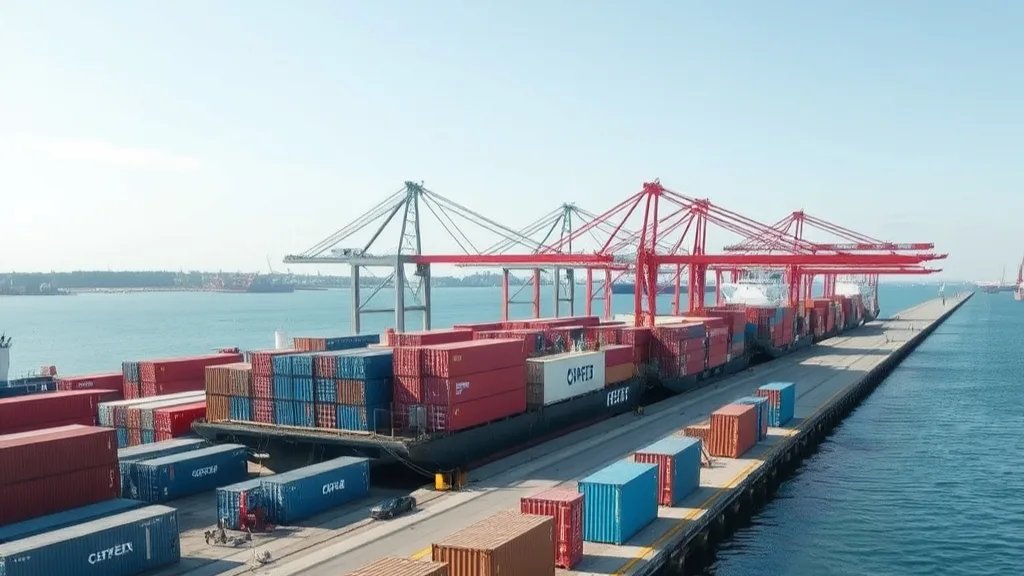
Italian exporting companies are facing escalating energy costs and supply chain disruption due to geopolitical tensions in the Persian Gulf. SIMEST’s newly launched €800 million support scheme offers a critical financial lifeline—combining grants and ultra-low-interest loans—to help businesses stabilize margins, modernize operations, and maintain international competitiveness.
Why the 2026 Persian Gulf Crisis Is Driving Energy Costs for Exporters
In an increasingly volatile global macroeconomic landscape, Italian exporting companies are facing a dual challenge: sustaining international competitiveness while absorbing systemic shocks in their energy supply chain. The recent escalation of geopolitical tensions in the Persian Gulf has sent ripples through worldwide energy markets, causing price spikes, logistics re-routing, and structural compression of operating margins.
To mitigate these disruptions and safeguard the international footprint of national brands, SIMEST, the CDP Group company supporting the internationalization of Italian enterprises, has approved an extraordinary intervention. Titled "Energia per la Competitività Internazionale" (Energy for International Competitiveness) and backed by a comprehensive budget of €800 million via the historical Fondo 394/81, this measure opens for applications on May 25, 2026, at 09:00 AM.
At CGPH, we analyze this facility not merely as a temporary financial relief tool, but as a strategic lever for corporate structural adaptation. This article provides an exhaustive breakdown of the macroeconomic background, technical eligibility criteria, financial architectures, and eligible expenses. Furthermore, it highlights how CGPH can fully support your organization through every phase of the process, from initial compliance screening to final reporting.
Why the 2026 Persian Gulf Crisis Is Driving Energy Costs for Exporters
The global economy in 2026 continues to demonstrate structural vulnerability to localized geopolitical flashpoints. The Persian Gulf, a vital artery for global energy traffic and international shipping corridors, is currently experiencing intense friction. These disruptions have introduced immediate and profound challenges for the manufacturing and exporting sectors in Western Europe. Italy is uniquely exposed due to its high reliance on imported energy and its export-oriented industrial fabric.
Geopolitical tensions disrupt industrial operations through three primary channels. First, direct energy price volatility introduces uncertainty over oil and liquefied natural gas (LNG) supplies, causing immediate price inflation in power grids and industrial gas procurement. Second, logistical overheads and supply chain friction force shipping lines to circumvent primary routes, triggering steep rises in freight insurance premiums, longer transit times, and delayed deliveries for raw materials. Third, margin compression occurs because exporting firms operate under rigid international contract pricing. Absorbing double-digit increases in production costs without the ability to fully pass them onto foreign buyers creates a direct squeeze on EBITDA.
Recognizing this systemic risk, the Italian Ministry of Foreign Affairs and International Cooperation, alongside SIMEST, has recalibrated its financial instruments to provide targeted capital injections.
What Is SIMEST’s €800 Million “Energy for International Competitiveness” Program?
The scheme enforces specific, quantifiable requirements to ensure that funds are directed toward businesses genuinely affected by the current crisis. To qualify, an applicant must be a legally established corporate entity in Italy with a verified international footprint. This is typically measured as a minimum percentage of international turnover over the preceding two fiscal years, representing at least 10% to 20% of total revenue derived from direct exports.
In addition to the export requirement, firms must demonstrate at least one of two indicators reflecting a structural deviation caused by the Persian Gulf conflict compared to an equivalent reference period in the previous fiscal year.
The first indicator is an energy cost increase equal to or greater than 10%. This requires a verified increase in aggregate expenditure on electricity, natural gas, or thermal energy, verified via utility invoicing or certified management accounts. The second indicator is a turnover reduction equal to or greater than 10%. This represents a drop in overall sales or specific export revenue directly correlated with market contractions, cargo delays, or cancellation of international orders stemming from the geopolitical crisis.
This dual-track entrance criteria is highly beneficial. It allows capital-intensive firms suffering from input inflation and logistical firms suffering from demand-side shocks to access identical financial relief.
Grants vs Loans: Understanding SIMEST’s Financing Structure
The financial structure of this SIMEST facility is highly attractive, combining deep subsidization with exceptionally long maturities. The scheme covers up to 100% of the proposed investment plan, split between a non-repayable grant and a subsidized loan.
The grant component reduces the overall debt burden on the balance sheet and varies based on corporate size. Large Enterprises are eligible for a 20% non-repayable grant, while Small and Medium Enterprises (SMEs) are eligible for a 30% non-repayable grant. This tiered approach offers targeted support to smaller enterprises, which typically possess thinner cash reserves and less bargaining power with energy providers.
The remaining balance of the investment plan (70% for SMEs, 80% for Large Enterprises) is funded via an ultra-low-interest loan drawn from Fondo 394. The base interest rate starts as low as 0.319% per annum, subject to periodic European state aid adjustments. The total duration of the loan is up to 8 years, providing substantial breathing room compared to standard commercial credit facilities. The structure also includes a pre-amortization grace period, during which the enterprise only services interest, allowing the implemented investments to generate operational cash flows before principal repayment begins.
To inject immediate liquidity into corporate cash flows, SIMEST allows approved applicants to receive an upfront cash advance of up to 50% of the total approved funding upon formal contract execution. This feature minimizes upfront working capital pressure during project deployment.
Eligible Investments: How Companies Can Use SIMEST Funds
A standout feature of this iteration of the SIMEST facility is its broad definition of eligible expenditures. The program permits a highly flexible mix of advanced technologies, traditional capital expenditures, and corporate capitalization.
Firms can allocate a portion of their investment plan toward high-impact modernizations, including Industry 4.0 capital goods like production machinery, automated logistics systems, and hardware integrated with enterprise Manufacturing Execution Systems (MES). Advanced software solutions, such as Enterprise Resource Planning (ERP) integrations, supply chain analytics tools, and energy transition systems like on-site renewable energy generation, are also fully eligible.
H2: Strategic Benefits: Why This Funding Is More Than Short-Term Relief
In a major regulatory update designed to provide maximum flexibility during an active operational crisis, the updated framework permits ordinary capital goods and software to account for up to 90% of the total investment plan. This means that companies do not need to entirely overhaul their facilities with hyper-advanced tech to qualify. General modernization, standard machinery replacements, core operating software, and baseline facility improvements are fully eligible, provided they support the company’s international competitiveness.
Additionally, the measure permits companies to allocate resources toward their controlled foreign subsidiaries via formal corporate capital increases or formalized shareholder loans. This specific expenditure line is capped at a maximum of €1.5 million per group and enables Italian parents to stabilize the balance sheets of international distribution arms or foreign sales hubs affected by upstream supply chain bottlenecks.
Navigating public funding programs requires absolute technical precision, comprehensive financial mapping, and strict regulatory adherence. Because the SIMEST application portal operates on a competitive, time-sensitive basis starting precisely at 09:00 AM on May 25, 2026, late or incomplete submissions risk missing out on the €800 million allocation entirely.
How CGPH Supports Your SIMEST Application End-to-End
At CGPH, we provide full, end-to-end professional management of the entire application life cycle. Our specialized corporate finance and internationalization advisory teams handle every operational requirement, ensuring your company can secure these vital resources without disrupting its daily operation.